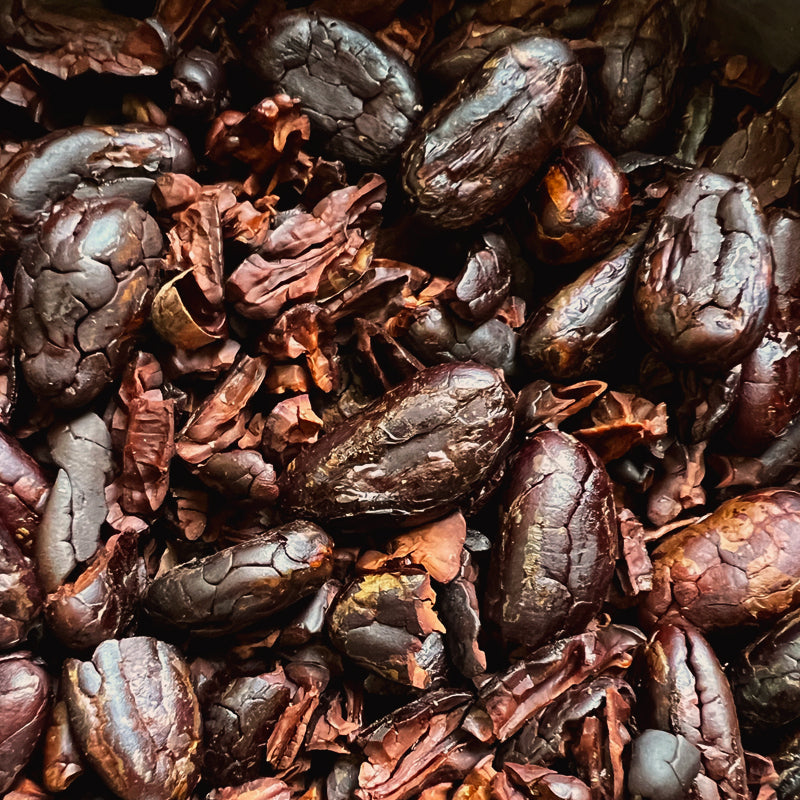
Did you know that beans
are cocoa beans fermented?
Did you know that beans
are cocoa beans fermented?
At first, we didn't know.
One day, we arrived at a chocolate shop, looked at the menu, and it said:
“Fermented cacao or washed cacao”
We drew a blank… what?
Well, “Let's try them to discover the differences.”
And so the investigation began… Cacao fermentation was discovered by accident. How? When harvesting cacao, the pod is cut and the husk is discarded. The pulp with the cacao beans was placed in a jute sack where the fermentation process would begin. Over time, farmers realized the potential of this process to improve the flavor of the chocolate and to make the most of it.
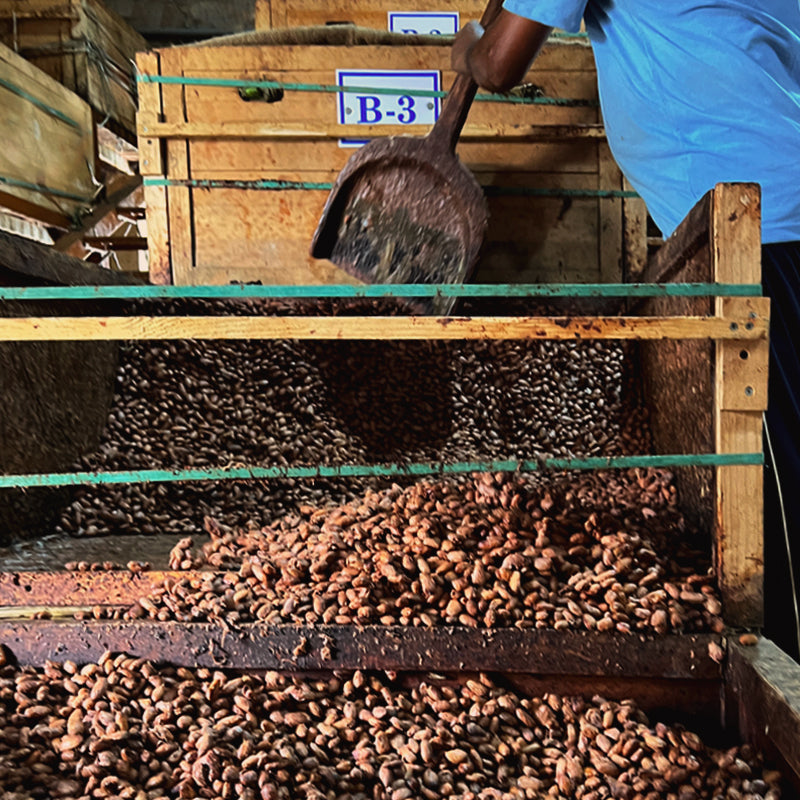
Nowadays, the cacao beans, with their pulp, are placed in fermentation boxes where the temperature, time, and aeration are meticulously controlled. Then, they are dried, roasted, and transformed into chocolate. With each harvest, specialists study the characteristics of the bean and determine the exact degree of fermentation it requires.
Discover how this process reveals the hidden flavors of each cacao bean we use at Chocolata Soul.
What happened to him/her?
my chocolate?
What happened to him/her?
my chocolate?
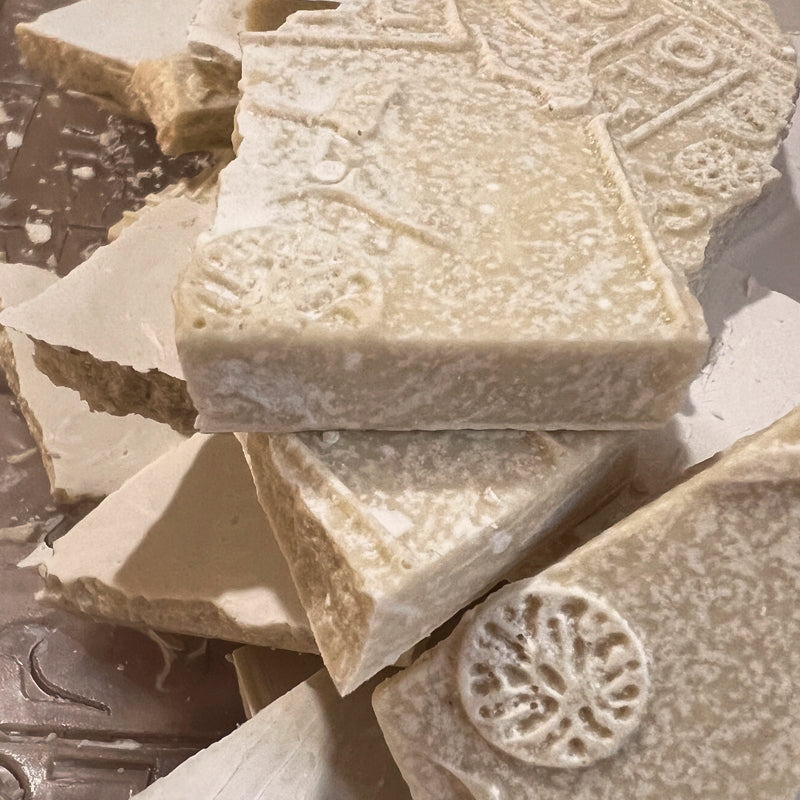
Oh no! What happened to my chocolate? Has it gone bad? It looks strange and has a white layer on it!
This has surely happened to you before, but it doesn't mean you bought poor-quality chocolate.
The truth is that chocolate is very sensitive to temperature changes. When it undergoes sudden changes in temperature, fat particles, also known as cocoa butter, tend to rise to the surface, creating that whitish appearance. Try rubbing it, and if the white layer disappears with the warmth of your hand, your chocolate suffered from a well-known effect called fat bloom.
Have you tried rubbing it and the white layer didn't disappear? That means your chocolate may have come into contact with water, causing sugar particles to rise to the surface, a phenomenon known as sugar bloom.
Both phenomena are quite common in chocolate when it is not handled or transported with care. In the event that your chocolate has suffered from fat bloom, its taste does not change, and you can use the tempering method to restore its beautiful, shiny appearance. Give it a try!
Hands
artisans
Hands
artisans
While looking for allies to bring my ideas to life, we met talented artisans. I learned that creative processes are personal and take time, sometimes more than we expected. Although miscommunication or delays can be frustrating, I came to understand the importance of working with people who share our values and commitment.
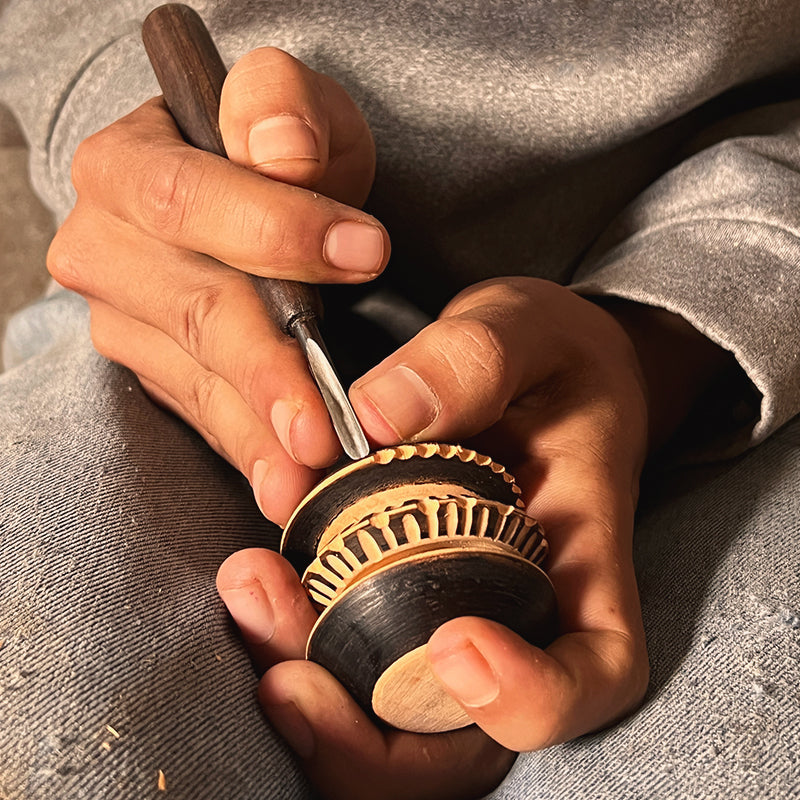
Eduardo, a young man who continues the family tradition of making "molinillos" by hand, helped us create a ball whisk. Although it seemed like a strange idea to him at first, his willingness and experience allowed this product to see the light of day and even be added to his own catalog.
We also collaborated with Juan Pablo, an expert in working with vegan leather. Despite the challenges, his attention to detail and innovative proposals made our thermal pouch possible, now an essential accessory for our chocolates.
Artisans are everywhere, and although there is still a long way to go, we confirm that what you dream of can come true.
Chocolate
it hurt my fingers
Chocolate
it hurt my fingers
I never imagined that making chocolate was such a laborious process. The first time I tried to make dark chocolate, I looked for quality fermented cacao. After talking with Rodolfo Fontanelli about his process and seeing that it met the necessary standards, we ordered his cacao directly from Tabasco. What a thrill when it arrived!
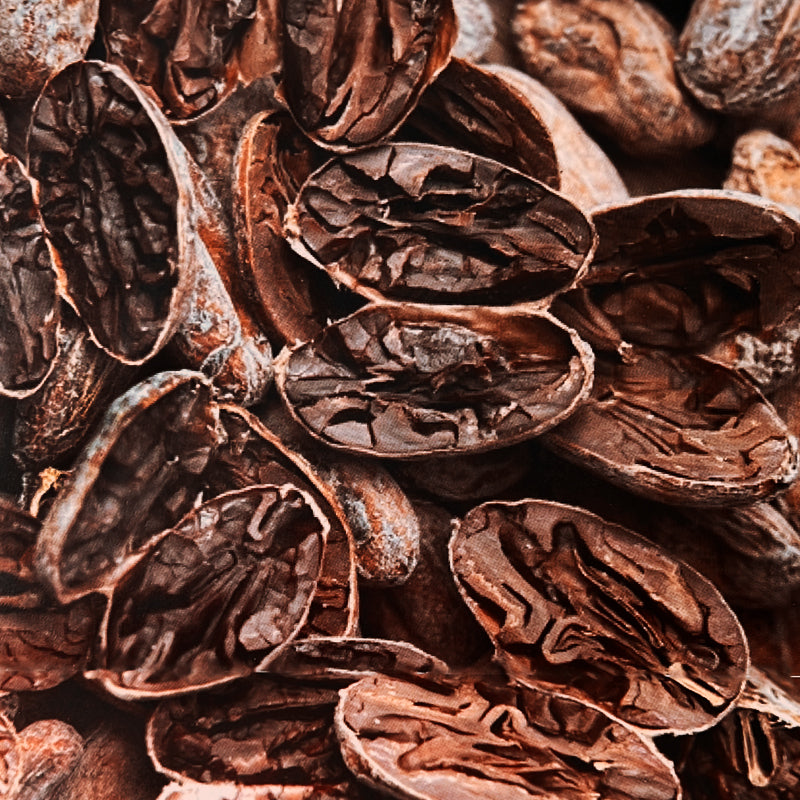
I roasted it at a specific temperature curve to highlight the bean's profile. During the peeling, I started to feel the rigor. I shelled each cacao bean one by one, immersing myself in a kind of meditation. Some shells came off easily, others didn't, always taking care to leave the beans completely clean. After 15 minutes, my fingers and nails started to hurt; with a kilo and a half left to peel, I had to stop because of the blisters.
I reflected on this process and imagined how they peel tons of cacao with machines, and how this process was done in pre-Hispanic times. I thought about how beautiful it is to connect with cacao and transform it, even if it involves effort and pain.
The good news is that we will soon buy a machine that will help us with this part of the process, without setting aside the artisanal aspect but allowing us to reach more people.
Searching
Cocoa
Searching
Cocoa
Visiting the countryside is an enriching experience. Connecting with nature and discovering the agroforestry system where cacao grows is a true pleasure.
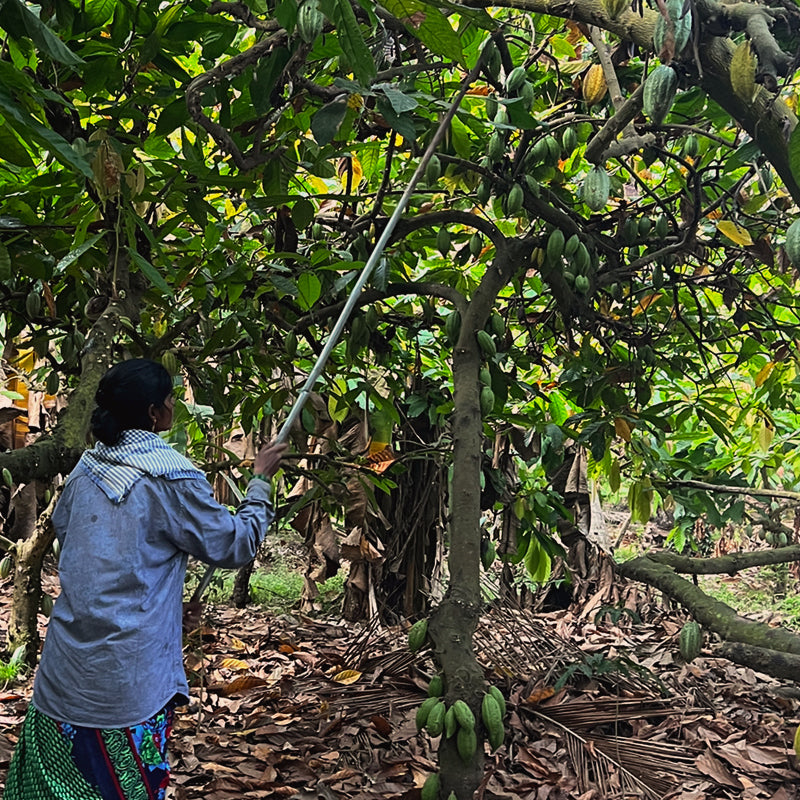
My first time in a cacao grove feels like it was yesterday. It was in Comalcalco, Tabasco, during a chocolate and cacao festival. The owner of the place where I stayed happened to have a cacao grove and invited me to visit it. Seeing the fruit trees, learning about achiote, and watching the monkeys in the trees was almost surreal.
When I saw the cacao pod, I was surprised that it grew directly from the trunk. Ruth, the farm owner, opened the fruit, revealing seeds covered in something whitish, the mucilage, which is essential for fermentation. When tasting it, its flavor is unique: lychee, citrus, strawberry, and soursop.
I learned that the cacao pod husk is important for the soil and that the pods ripen at different times, so during harvests, someone must walk the farm daily to cut the ripe pods and take them to be fermented.
Every cacao grove I visit continues to surprise me with its varieties of fruits and trees. Would you like to have this experience with us?
Contact us and let's go together in search of cacao!
Where is it?
the magic?
Where is it?
the magic?
More than two years ago, at the beginning of my adventure in the world of cocoa, I was lucky enough to return to Ecuador and reconnect with my friend Alfredo. I told him about my new interest in cocoa, and to my surprise, he invited me to visit the San José hacienda, where his family's cocoa plantation is located, which years later would win a gold medal at the "Cacao of Excellence" competition.
During the harvest, surrounded by the scent of the countryside and bananas, Alfredo and the engineer Jorge Rodríguez guided me through the plantation. Rodolfo, a farmhand, showed me how the cocoa pod is extracted and split. I learned about fermentation and drying, and although I was already impressed, the most surprising part was yet to come.
In his office, Juan Touma, the head of exports, offered me a taste of five jars of cocoa liquor, each with a unique flavor: nuts, banana, burnt notes, acidic and fragrant fruits, and my favorite, a subtle combination of nuts and banana.
Juan then revealed the most surprising thing to me: all those flavors came from the same cocoa. The samples were the result of exploring its fruit until its maximum potential was extracted. The magic was in the fermentation and the roasting!
Swiper space